Interrupting Men
and an update on my personal life

I was out with a group of women recently. One was bemoaning interrupting men—the participle, not the gerund. She was sick of being talked over. I listened to her with interest. I, too, dislike interruption, but I rarely blame my interrupter (unless I’m in an argument, in which case, he’s the oppressor, obviously).
Being interrupted, as I experience it, is a personal failure: My ideas were boring. My attempt at entertainment flopped. The shame is immediate, my severed sentence a writhing, pulsing, screeching entity, as loud as a bad punchline.
Granted, I don’t interrupt when someone’s boring me; I interrupt when I’m activated—pissed off perhaps, or jacked on caffeine—but when I’m interrupted, I forget that people have infinite reasons for behaving in the ways they behave.
I hate that joke about the Interrupting Cow:
Knock knock.
Who’s there?
Interrupting Cow.
Interrupting C--
MOOOOOO.
I asked the women at the table, “Why is it embarrassing to be interrupted?”
“It’s not,” my friend Leslie said. “You’re giving the interrupter too much credit.”
Her observation felt revelatory. “Interruption” has no fixed definition, or at least no fixed connotation. Like everything, it has different meanings to different people, and different meanings in different contexts. I’m forever relearning that basic lesson. To Leslie, why some philistine can’t control himself is the most boring mystery on earth.
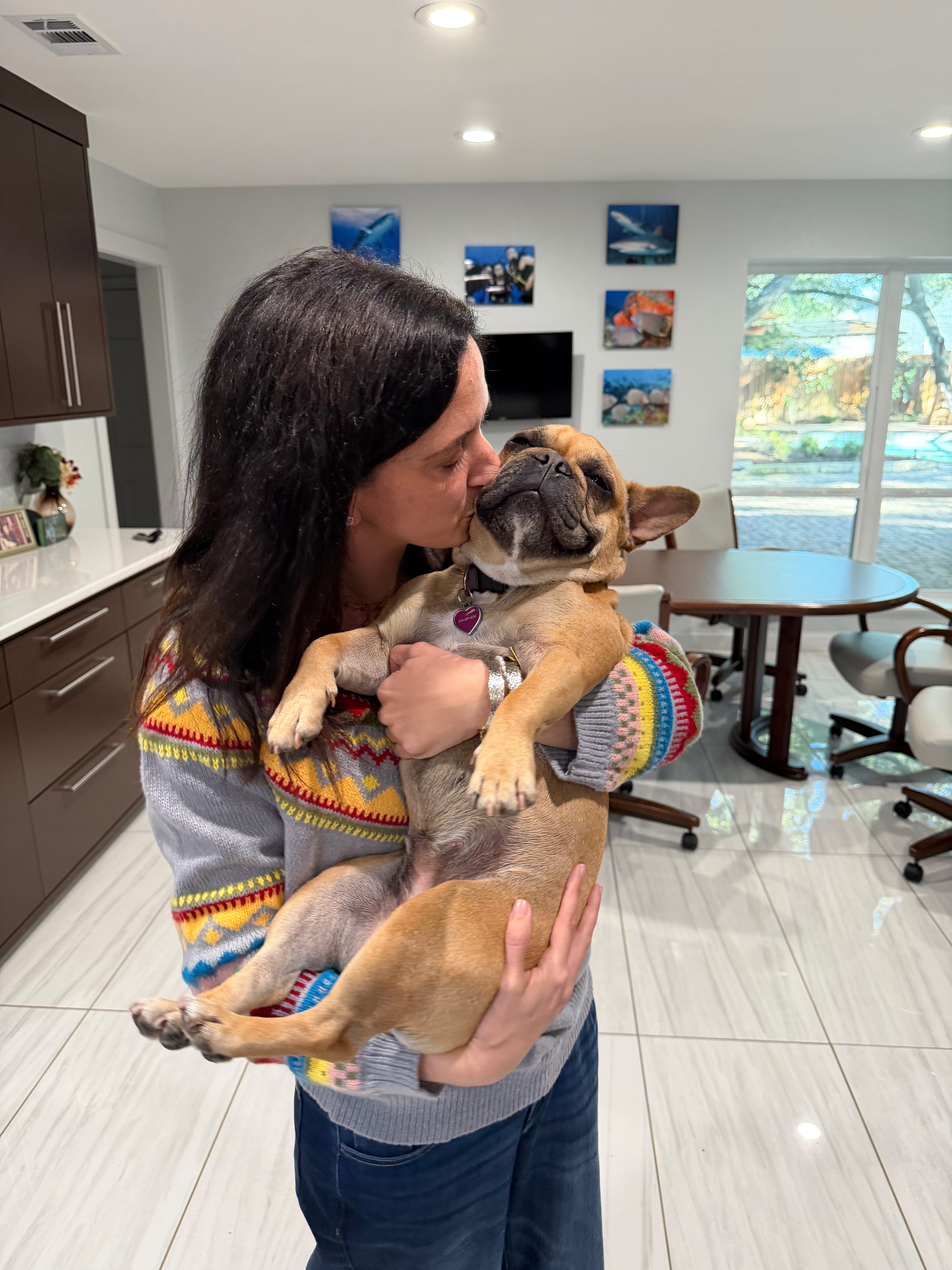
When we met, three years and three months ago, the stranger who would become my partner said, “I have little kids. Is that a deal-breaker?”
I thought, Depends what kind of dad you are.
I had no interest in dating a deadbeat, or a guy who let his kids act like assholes, or a guy who would tell me, either to hold me at an arm’s length or lionize his parenting prowess, “My children always come first.” I wanted him to show me, not tell me, that his children came first, and I wanted him to put me first, too. I already knew that if we fell in love, I would put all of them first. I had no interest in a love hierarchy.
When people hear that my boyfriend has kids, they assume the situation is complicated. It is complicated, but probably not in the ways they imagine.
How’s that going? they ask.
Have they warmed up to you? they ask.
There was no warm-up. When I met them, they ran into my arms. We haven’t separated since. They climb on me like puppies. We make dinner together and have dance-offs. We play a lot of Uno. We play a lot of Would You Rather?. (Forgive me for bragging, but I dominate at Would You Rather?.)
The complication is that my domestic stirrings generate an identity crisis. I’m not a domestic creature. I believe this even though two of my favorite activities are cooking and lying down. I am a person of the world, watching the open road unfurl through my windshield, or moving to a Mexican village, or sobbing after having my tea leaves read in Cusco. I am not a person who plops down on a big suburban sectional couch to watch Bluey.
Domesticating feels increasingly like political concession. I revile the smug ideology of fundamentalists, who claim that women can’t be fulfilled without husbands and children. I hesitate to even use the word “ideology” because it implies time spent thinking. Parroting regressive messaging that once prevented women from voting is not just anti-intellectual and disparaging; it’s politically opportunistic.
How unimaginative, how archaic, to deem family life the only legitimate life; to deem all other relationships, all other ways to spend one’s time, all other worldviews, inferior. I find joy and depth and meaning in friendship, in strangers, in romance, in introspection, in eschewing routine, in freedom, in novelty, in centering no one, in scattering my love. My love belongs to many people. I belong to many people. That my life now has three specific people at its nucleus, that a physical house has gravity now, does not mean that anything was missing before.
And yet.
I haven’t traveled much this year, but from April to July, I’ll be in Far West Texas, Utah, Ireland, Austria, the Bahamas, and South Texas. In response to this looming schedule, I find myself playing a constant internal game of Would You Rather? Usually, time at home interrupts my traveling, but now the opposite feels equally true. Which one deserves the floor? Which one is the Interrupting Cow?
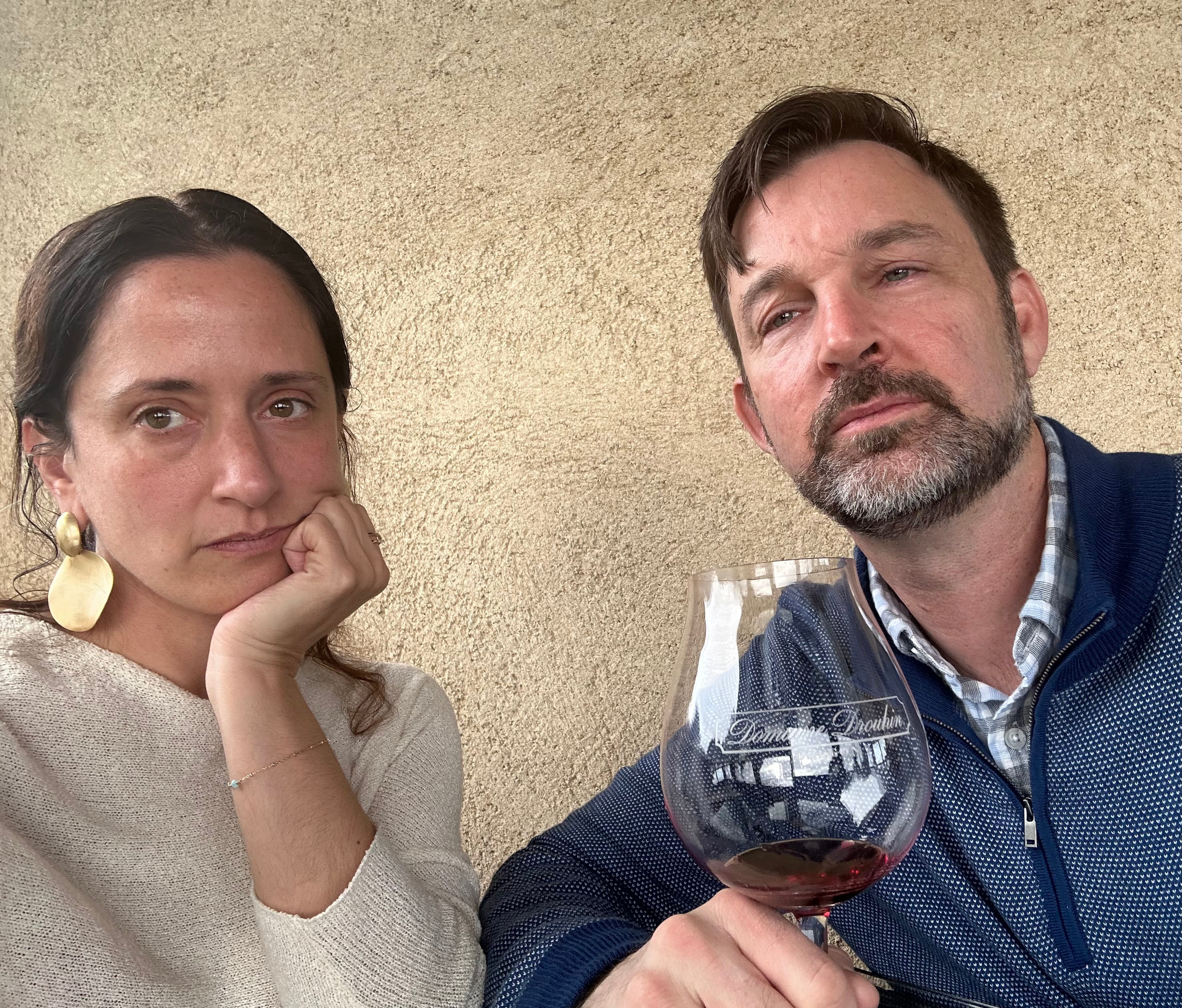
Early in our relationship, we were parting ways one day when my boyfriend’s daughter opined, “Why is leaving even a thing?”
Like everyone, I love when kids are inadvertently philosophical. Now, she and I often repeat her question when we have to separate, whether I’m embarking on a two-week work trip or a one-hour yoga class.
I know why leaving is a thing. I know lots of reasons why it’s a thing. And also, I agree with her.

Early this morning, while my boyfriend was dealing with some scheduling stuff on his phone, his son was saying, “Dad?…Dad?….Dad?”
“Wait a minute,” my boyfriend said. “I’m doing something.”
His daughter, too, developed an urgent need: “Dad?”
“He’s busy and you’re interrupting him,” her brother told her.
They both stood still, staring at their father.
“Dad?” each tried a few more times, to no avail.
My boyfriend, who has been “working on the interrupting thing with them,” kept doing whatever he was doing until he’d finished.
“Done,” he said finally, sticking his phone in his pocket.
“Dad?” his daughter said.
“Yes?”
“How many minutes is Opalite?”
“I don’t know. We can check once we’re in the car.”
“Dad?” his son asked.
“Yes?”
“Which one do you like best—your bed, the chair, or the couch?”
“My bed.”
“Then which one?”
“The chair.”
“Then which one?”
“The couch.”
“Dad?”
“Yes?”
“Do you love your bed?”
I was reminded, by this absurd conversation, of other absurd conversations, including one I had a decade ago, shortly after I moved to Mexico, when my then-boyfriend left me alone with his father, who spoke no English. My Spanish was still so limited, all I could do was smile psychotically and ask, apropos of absolutely nothing, “How do you prepare your rice?”
“First,” said my then-boyfriend’s father, “I put oil in a pan.”
“Very good!” I said, grinning with every muscle in my face.
“And then,” he said.
“And then?”
“I toast the rice.”
“Oh, good!”
I willed my then-boyfriend to return from the bathroom, to intrude on the incredibly stupid conversation I had imposed on his father, to cut me off mid-painful-sentence. To please, please, please interrupt me. Please.
Love,
Diana
P.S. I’m going to send out an official email about it soon, but my next Zoom writing class (free for paid subscribers) will be April 21 at 7 p.m. Central. Mark your calendars!
P.P.S. Has any change in your life ever generated an identity crisis? Let me know in the comments.
P.P.P.S. A brand-new writing prompt!
Being interrupted has affected my life way more than I’d like to admit. Not being able to get a word in at all even more so. I’ve listened to a lot of monologues disguised as conversations. Sometimes I think of writing as being able to say something without being interrupted.
When I started running, I was 37 years old, and no one who knew me had ever thought of me as a budding athlete, least of all, me. Running changed my body, my circle of friends, and probably made it possible, as a natural outcome, for me to leave a marriage that had become oppressive for me and my two children. And yes, he was an interrupter of gigantic proportions! I loved this and yes, "Why is leaving a thing?"