Consider the Schnitzel
on friendship and travel

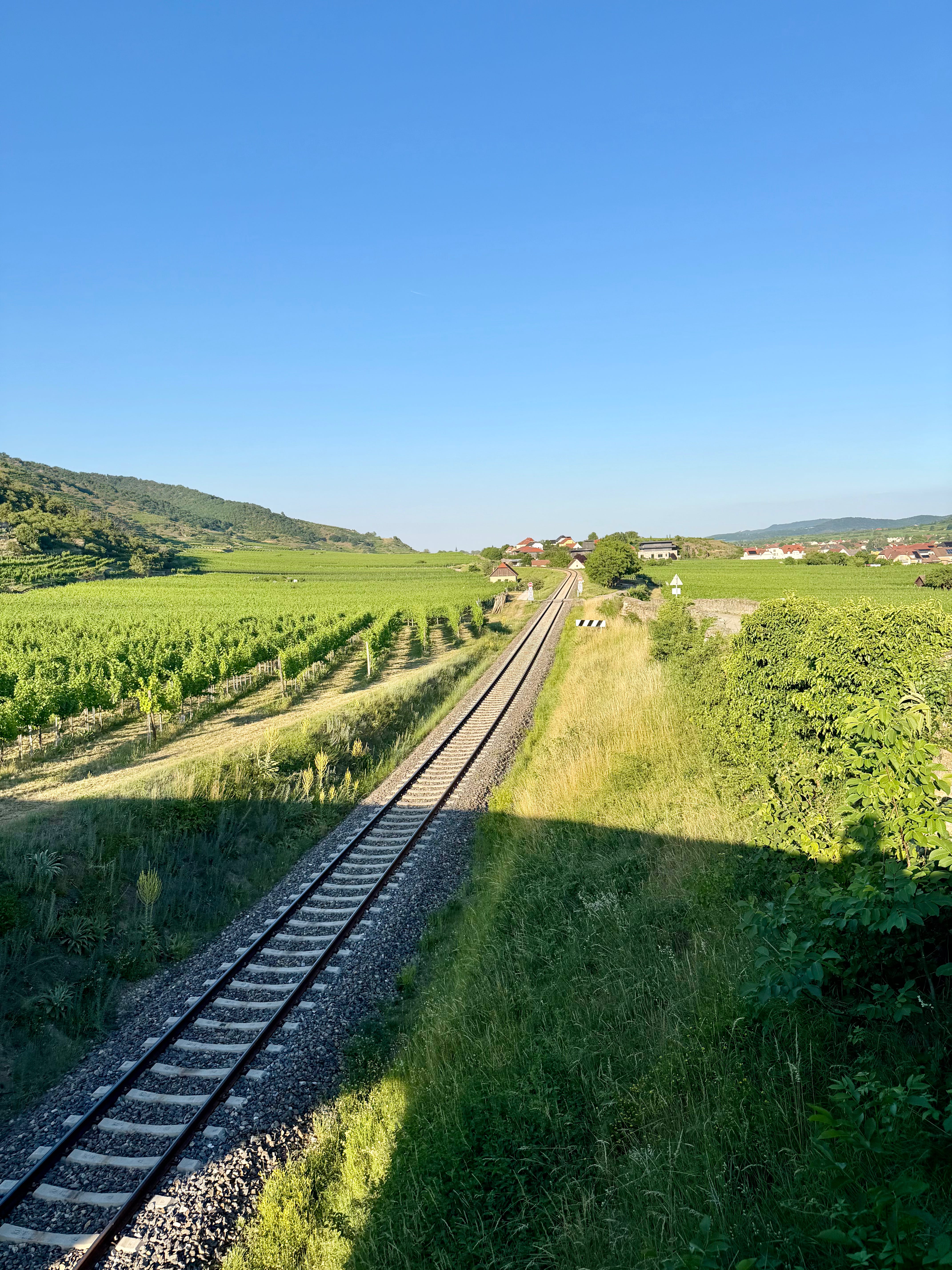
My friend Alison and I just spent a few days in the Wachau Valley, a wine region in lower Austria. We biked along the Danube—stopping now and then to swim in it—through vineyards growing Grüner Veltliner and Riesling, through towns lit by red terracotta roofs, past naked locals braving the heat wave, and right up to a giant sculpture of a nose. We saw olive trees. We saw a snake scribbled on the bike path. We saw little weasels sticking their heads out of holes in ancient dry-stone walls.
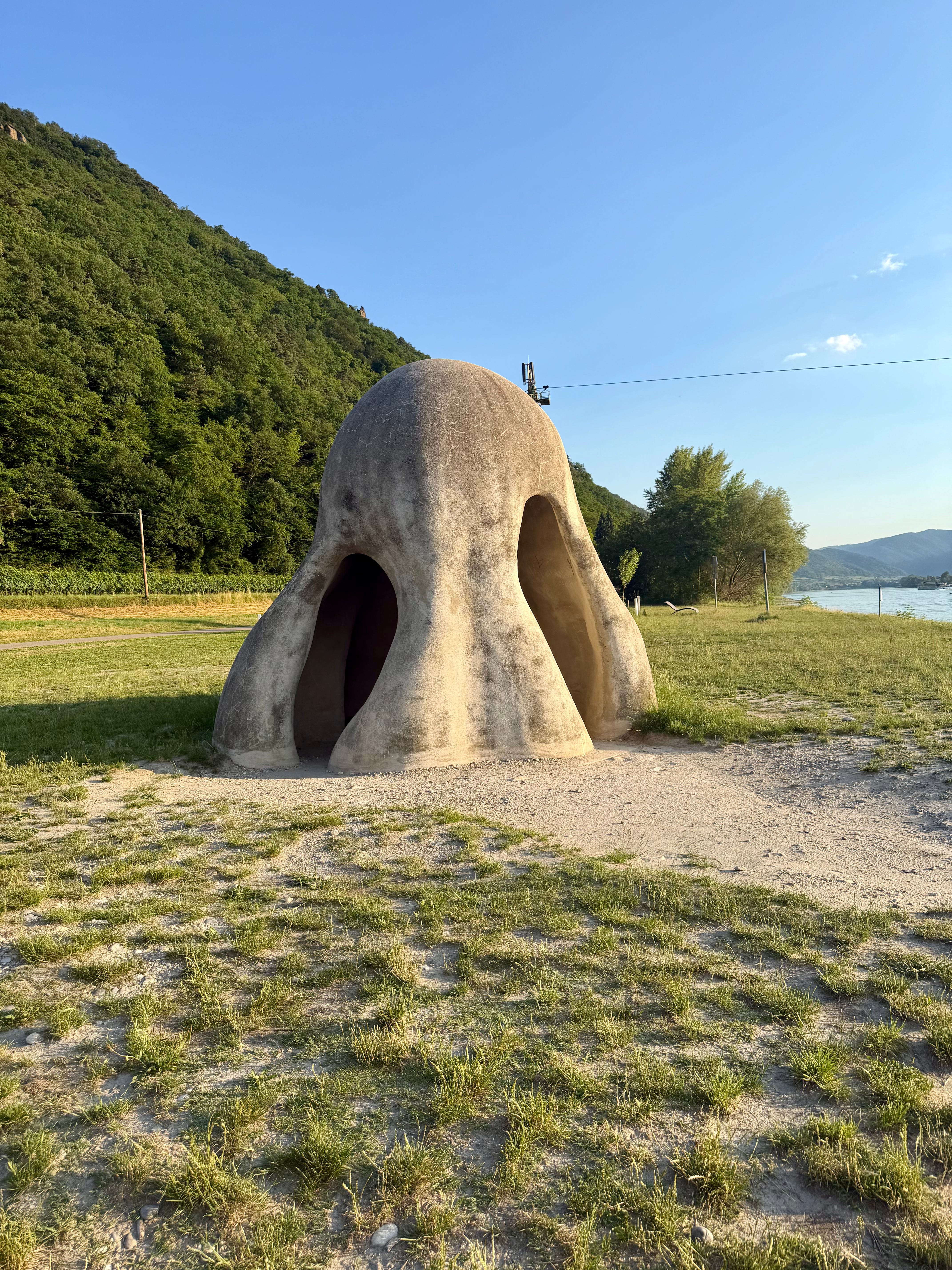
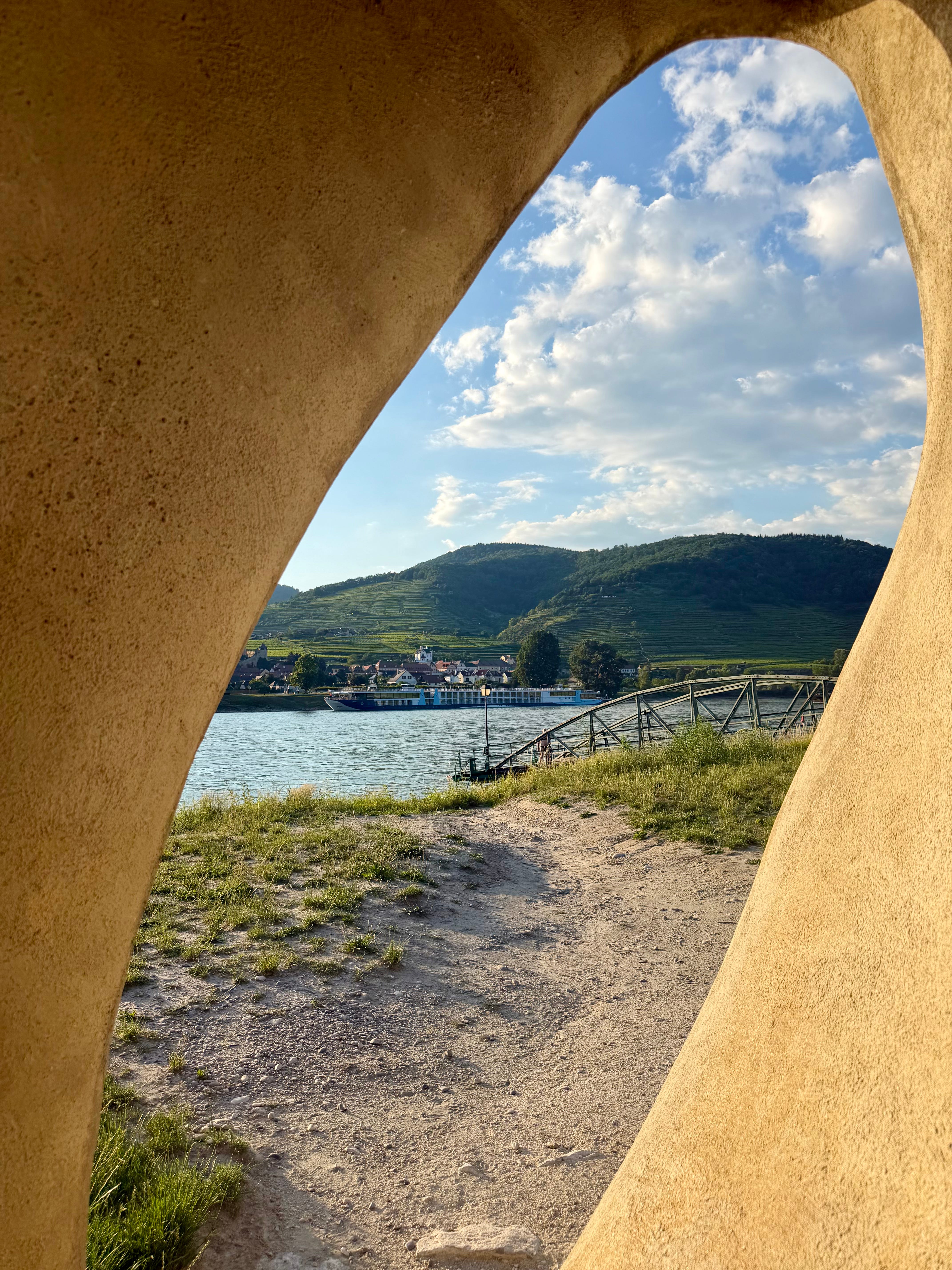
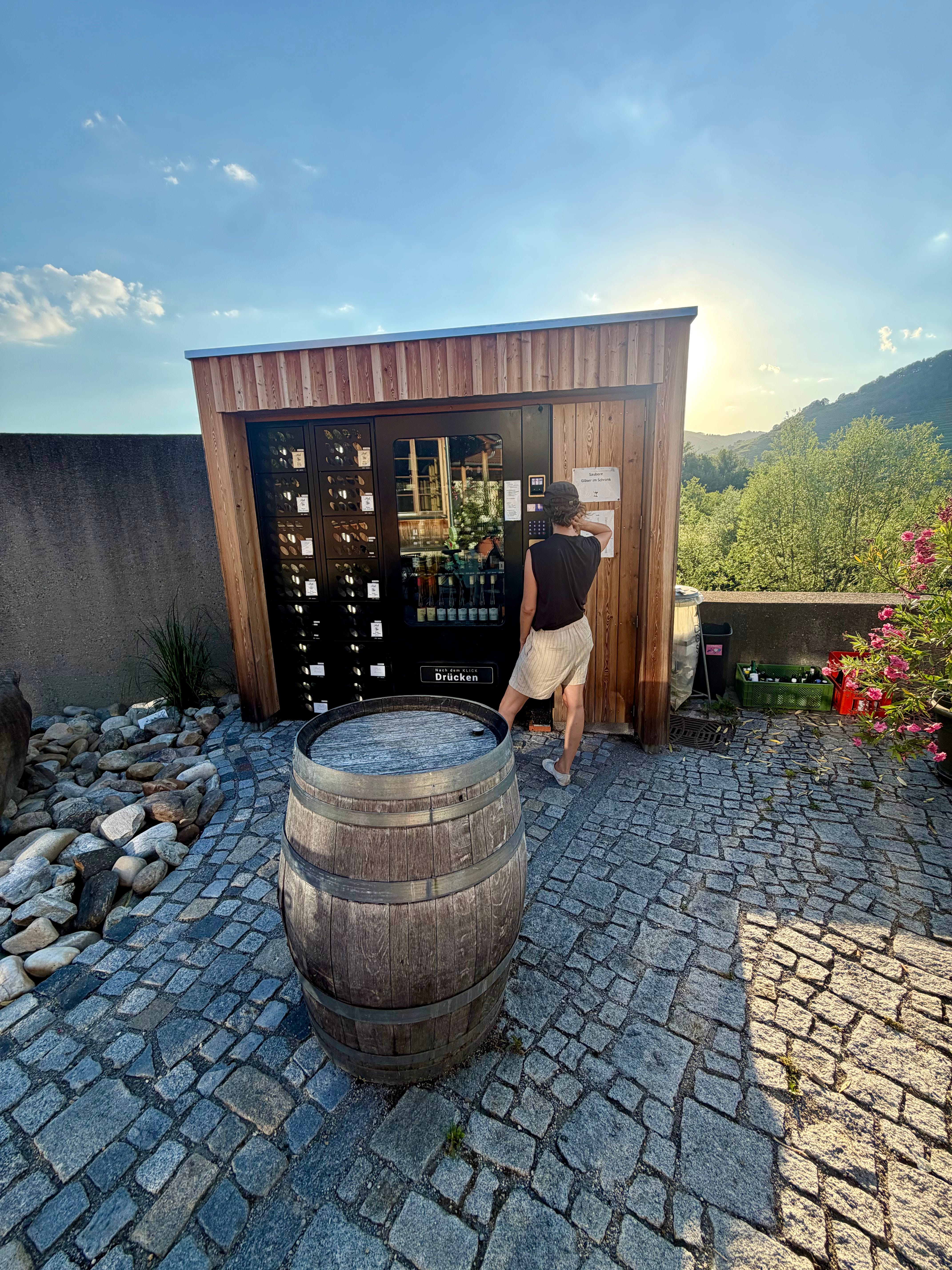
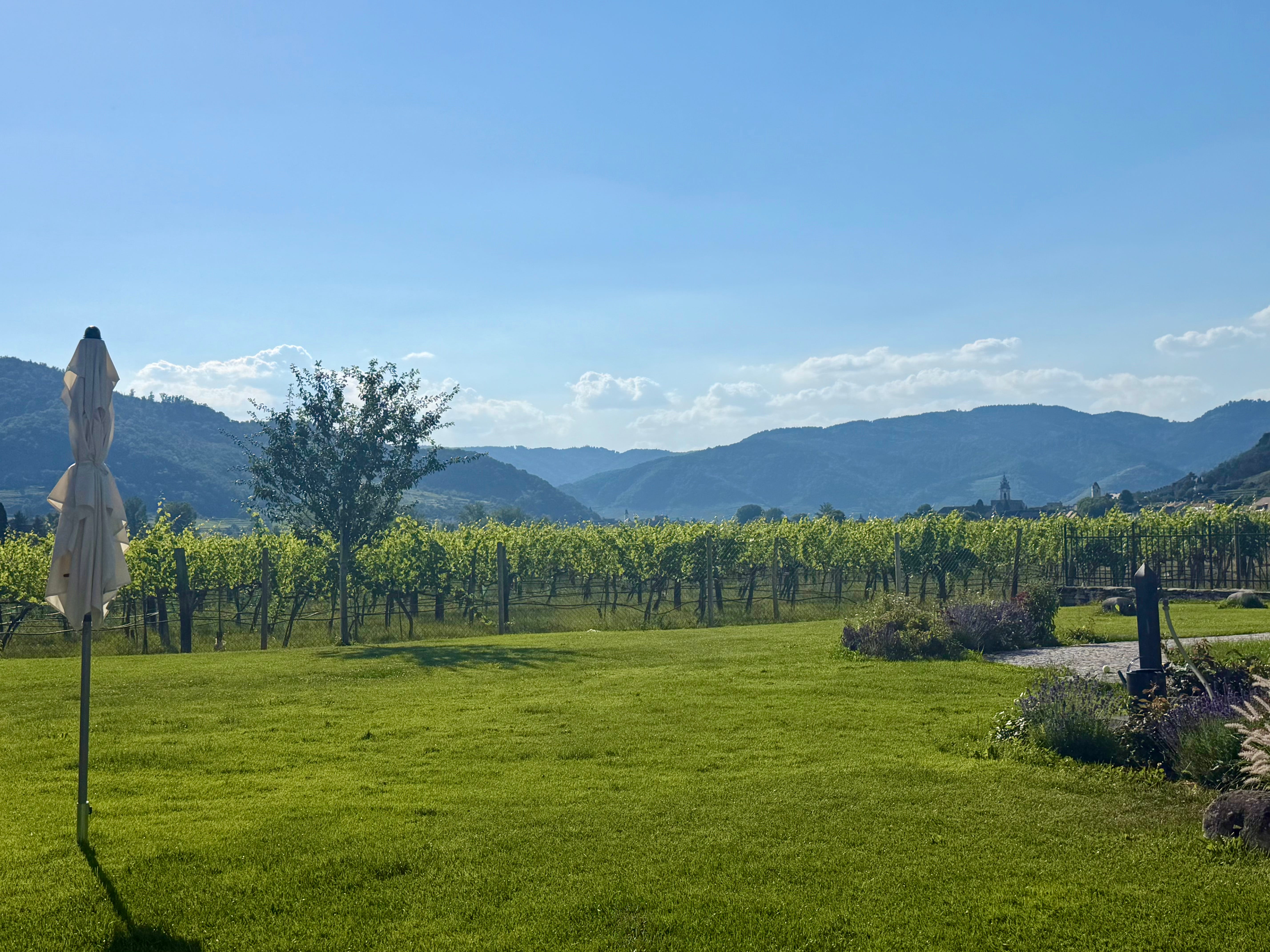
Wachau is utterly, blessedly non-touristy—menus in German only, nary an American in sight. While we didn’t get to all 117 wineries, we agreed that one called Paul Stierschneider offered the most elegant whites. To taste, you bike up to any winery and ring the doorbell and sip with families who have been growing grapes in the valley for centuries.
One day as we lay on towels in the shade by the Danube, I tried on Alison’s sunglasses, saw the world through her polarized lenses, and asked, “Why do you think we travel so well together?”
Alison is the director of the MFA program I teach for, and each summer, we gather with our students in Europe for a two-week residency. This summer, we’re in Vienna, 60 miles east of Wachau. When we met five years ago, Alison and I became instant friends, in a way that felt like resuming a decades-long conversation. Since then, we’ve traveled a lot together, including to Barcelona, the Costa Brava, Dublin, Sligo, and the Poconos.
She didn’t have to consider my question for long. “I’m pretty easygoing,” she said.
I found it inspiring that she credited herself for our entire friendship.
There’s that cliche that if you want to test a relationship, you should travel together. Then you’ll know. But why would you travel with someone if the relationship needed testing? Moreover, why should we conduct relationship tests, as if people are drinks that might be poisoned? I’ve traveled with scores of people, and only once did a trip shine a black light on a friendship. I’d flown from New York, where I lived, to Seattle, where my friend lived, so we could spend a few days road-tripping down the Oregon Coast. We stopped for a night in a hotel where each room had a literary theme (ours was Dr. Seuss), and where guests dined together in a single seating at a picnic table by the sea. We saw a haunted lighthouse and hiked through a fairy-tale fern forest. But this Pacific Northwest dreamscape was tainted by the one-person resistance campaign my friend waged against strangers. If someone spoke to her, she acted affronted. If I talked with anyone besides her, she pouted. Why travel if not to connect with people you’ll never see again? She wanted us caged together like kennel mates. I was young, and she was five years younger, so perhaps, had we remained friends, I’d have watched her mature past her insularity and petulance, but by the time I flew home, I felt so suffocated, so turned off, I let our communication slow to a stop. I heard she got married, had kids, got into gardening. I don’t know. I’m bored just thinking about her.

Our first night in Vienna, Alison, Bob (another member of the faculty, who’s also a dear friend of ours), and I were enjoying one last drink at a rooftop bar. The temperature had sizzled all day in the 90s, but now that dark had fallen, we had a breeze. Above, we had the chipped plate of the moon. Beside us, we had a bachelorette party, which we’d feared would be loud, but turned out to be civilized.
We talked about someone we know who scares us, but for three distinct reasons. We agreed that our fears said nothing about the object and everything about our own perspectives, that the person was merely an ink blot onto whom we projected our personal wounds. At some point, we realized that Bob, who had started the conversation, had called the person he feared by the wrong name, so Alison and I were talking about one guy, while he was talking about someone we found wholly nonthreatening. For a minute, we were all confused. Then we debated how to pronounce “Rorschach.”
When the conversation turned to this essay I was writing, Bob suggested the title, Consider the Schnitzel. I don’t eat schnitzel. I find its enormity grotesque. When it arrives at the table, I think I see it breathing. I liked the title anyway.
I wondered aloud if it’s easiest to travel with other frequent travelers (all three of us, for our respective reasons, have spent our adult lives traveling) because many infrequent travelers experience anxiety about details, obsession with schedules, a desire to pack it all in. When Alison and I travel together, we might spend a whole morning drinking coffee and talking before getting it together to actually do something. We don’t put pressure on any one trip, I guess, because trips constitute our norm.
I suppose I also prefer not to travel with people who rhapsodize about “unplugging.” I don’t separate travel from work. The vast majority of my traveling is work-related, and even if it’s not, I work while traveling. Those offended by my laptop, by the workaholism for which writers are notorious, won’t enjoy my company much.
Here in Vienna, I gave a seminar yesterday on travel writing. I told my students to remember a trip they’d taken, and remember, too, what was going on in their lives at the time, because a trip is never just a trip; it’s a container for our obsessions. One student said that in her 20s, she went to Rome to preach the gospel (if anyone’s already heard the gospel, it’s Rome, but that’s neither here nor there), while also, secretly, struggling with her sexuality. Another talked about a vacation she took to Jamaica while her marriage was coming apart. I told them about traveling to the Maldives, quite depressed, and hearing from locals about an “island for the mentally ill.” I wanted to go to the island, but whenever I asked for details, people would backpedal, claiming that it was something from the past, that it no longer existed.

In the Maldives, I was alone, and I felt alone. Depression tells you you have no friends, though really your friends are there the whole time, alive on the other side of the world, so happy and grateful that you’re alive, too. When I remember that aloneness, it seems crude to consider whom I might travel best with, like considering which pile of money is my favorite. I got one of the worst sunburns I’ve ever had. The pain, relentless, came from everywhere—the sky, my skin, my heart. Touch was unbearable, but all I wanted was touch, or at least someone to watch with me as dolphins arced out of the sea at dusk; someone who’s the kind of traveler I’m not, who thinks to pack all the first-aid stuff, who unzips a backpack, who passes the aloe, who wants this for me: relief.
Love,
Diana
P.S. A new writing prompt…
P.P.S. Who do you travel best with? Who will you never travel with again? Let me know in the comments.
P.P.P.S. If you travel to the Wachau Valley, I recommend this restaurant for lunch (the lasagna!) and this one for dinner (the freshest lettuce! the strongest blue cheese!). The food out there is so good.
There is one person I travel well with and I love her so for putting up with me. Wachau Valley sounds fabulous.
From reading this and your other travel adventures, I feel like we would get along well while traveling, too. I couldn't imagine going on a trip anywhere and not interacting with the locals and other visitors. That's such a big part of the experience!
(Though sadly, I almost always forget to pack something, whoops.)